

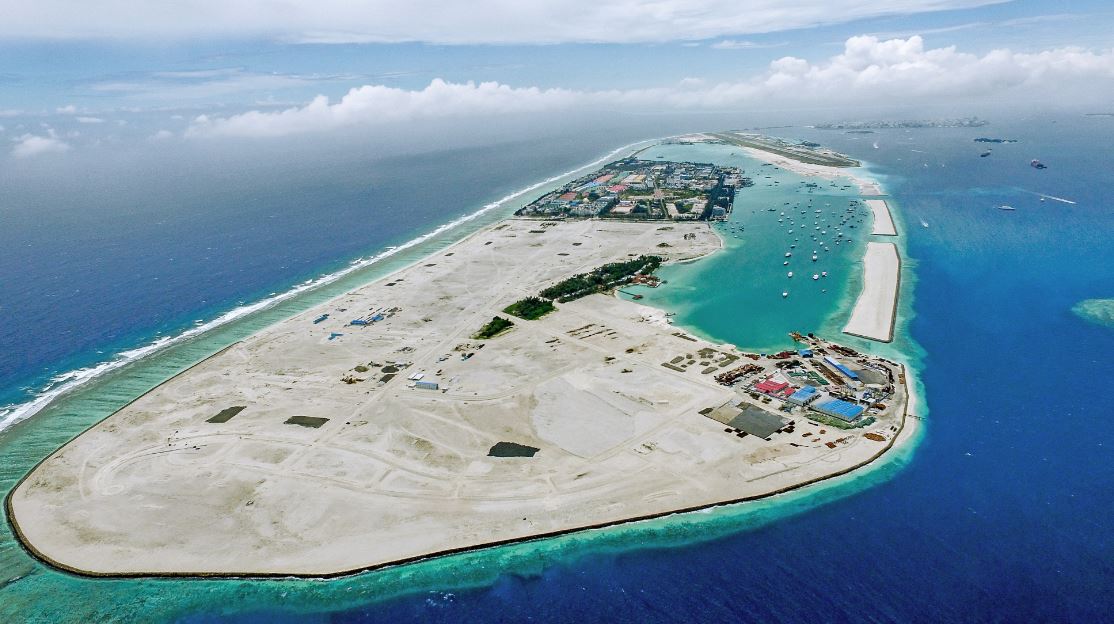
In the Maldives, you know how emotional conversations about development get. Every island dreams of the same things — proper roads that don’t flood when it rains, harbours where boats can actually dock safely, electricity that doesn’t cut out every other day, clean water, decent homes, a place for kids to play sports, and basic services that work. These aren’t crazy demands. They’re what makes life livable and gives people dignity.
So when the President shows up on your island and promises all these things, of course you feel hopeful. It feels like finally, someone’s listening. After years of being overlooked, it seems like real progress is coming your way.
But here’s the thing we don’t talk about enough — and honestly, it’s something that really needs to be out in the open. There’s a fundamental truth hiding behind all those promises, and once you understand it, suddenly a lot of our country’s problems start making sense: the rising prices, the dollar shortages, fiscal pressure, the huge debt, all of it.
Here goes the truth: Development is never, ever paid for by the President. Not by ministers either. Not by “the government.”
Development is always paid for by the people. Either right now, or later.
And no, this isn’t me being political. This is just how money works when it comes to public spending. Once you get this, everything else clicks into place.
The Government Doesn’t Actually Have Its Own Money
It sounds weird. We’re so used to thinking the government has this big pot of money somewhere. But think about it: the government doesn’t run a business. It doesn’t have some secret treasure chest. Every single rufiyaa it spends has to come from somewhere real.
And where does it come from? Three places:
First, taxes and fees — basically, money we all pay in our daily lives when we buy things, import stuff, or run businesses.
Second, borrowing — which is just getting money now and promising to pay it back later, with interest.
Third, profits from state-owned companies (when they actually make profits). And when they don’t? Guess who covers those losses? Yep, us again.
That’s it. There’s no secret fourth option. No magical money tree. Every decision the government makes with “public funds” eventually circles back to affect regular people like you and me — through taxes, higher prices, worse services, or bills our kids and grandkids will have to pay.
So whenever someone announces a shiny new project, the real question shouldn’t be “Does this sound good?” It should be “Who’s paying for this, and how long will we be paying?”
Why Borrowing Feels So Easy (And Why That’s Dangerous)
Here’s why borrowing is so tempting for governments: When they raise taxes to pay for something, we feel it immediately. Prices go up, our wallets get lighter, and we complain. Loudly. So there’s pushback.
But borrowing? That feels different. Money shows up fast, construction starts, everyone’s happy, and nobody has to sacrifice anything today. The pain is pushed off into the future. That’s why politicians love it — all the credit, none of the immediate backlash.
But here’s the catch: borrowed money isn’t free money. It’s just delayed payment. You’ve got to pay it back, with interest, sometimes for decades. A project approved today might still be draining money from the budget long after everyone who approved it has retired. It happens more often than you think.
Don’t get me wrong — borrowing isn’t always bad. When used wisely, good debt is a tool that can build infrastructure helping the economy grow and pay for itself. But when borrowed money goes into projects that don’t actually increase our ability to earn more as a country? That’s when it becomes dangerous. We’re basically living better today by making tomorrow’s citizens pay the bill for decisions they never made.
Why Every Government Keeps Saying “Yes”
Look, from where we stand as regular people, asking for development makes total sense. We want airports, better roads, jobs, opportunities — these things directly impact our lives. No island wants to be left behind. Nobody’s asking for these things out of greed; we just want progress and fairness.
But from a political point of view? Saying “no” is basically political suicide. Saying “maybe later” is almost as bad. Politicians know that visible development = votes. Being cautious with money? That doesn’t win elections. So regardless of which party is in power, they almost always say yes to development requests, expand budgets, and borrow when needed.
This isn’t automatically corruption. It’s just politics. But here’s what gets missed: economic reality doesn’t care about popularity. The financial consequences stick around long after the ribbon-cutting ceremonies are over.
Development That Looks Good vs. Development That Actually Helps
Here’s something we really need to understand better: There’s a huge difference between development that looks impressive and development that actually makes our economy stronger.
Some projects do both — they improve our lives and help the country earn more money or become more productive. But other projects? They mainly just improve convenience or appearances. They bring social benefits and make us feel good, but they don’t generate any income. And when these projects are funded through loans, the cost doesn’t end when construction finishes. It keeps going, year after year after year.
Real Talk: The Sinamalé Bridge
Take the Sinamalé Bridge. It opened in 2018, and honestly it’s been great for connectivity. Getting between Malé, Hulhumalé, and the airport is so much easier now. No waiting for ferries. From a practical standpoint, it’s definitely useful.
But here’s what most people don’t think about: The bridge doesn’t make any money. There’s no toll. Meanwhile, it needs constant maintenance — inspections, lighting, security, repairs. We’re talking hundreds of thousands of dollars every year. Plus, we still have to pay back the loan we took to build it.
Since the bridge doesn’t earn anything, all those costs come straight from the government budget. Which really means they come from our taxes. Even if you never use the bridge, you’re helping pay for it through taxes and the overall pressure on public finances.
Now, I’m not saying the bridge was a mistake. The point is different: When big infrastructure projects don’t have any way to recover costs — even partially — the financial burden shifts on to the annual budget. Year after year. Quietly.
If even a basic toll could cover maintenance and some loan payments, it would ease the long-term strain. When there’s zero income? Taxpayers carry the full load forever.
This is how fiscal pressure builds up without most people noticing. Projects look successful because they’re visible and useful, but their financial weight only becomes obvious later — when budgets get tight, borrowing increases, and other services get cut.
Another Example: The Hiyaa Flats
Think about the Hiyaa housing project. Built with billions in borrowed money to provide affordable housing — which, to be fair, was addressing a real need.
But housing projects don’t end at construction. There are loan repayments, maintenance, repairs, utilities, management. To cover these costs, rental income is supposed to help, right? In theory, rent should cover at least part of the expenses.
Except… rental rates have been reduced multiple times. Many residents don’t pay rent regularly. The government hasn’t been able — for social, legal, or political reasons — to enforce payments or evict non-paying residents. And now there’s even more pressure to lower rents further.
When rent income drops or disappears, guess what? The costs don’t magically vanish. Loans still need to be repaid. Buildings still need maintenance. Elevators break. Water systems need upkeep. When rent doesn’t cover it, the national budget does.
In other words, the cost gets transferred to everyone else. Taxpayers — including people who don’t live in those flats — end up covering the loan payments and maintenance through public funds or more borrowing.
Public housing isn’t wrong or unnecessary. But here’s the lesson: Affordability has to be balanced with sustainability. If we treat public housing as completely free without realistic cost recovery, it becomes a permanent drain instead of a long-term solution.
Not All Economic Activities Are Created Equal
Here’s something that doesn’t get enough attention: Not everything people do for work contributes to our economy in the same way. Some activities bring new money into the Maldives. Others depend on money that’s already here.
Let’s understand in more depth.
Income-generating activities bring fresh money in — especially foreign currency. Tourism and fishing are the big examples. When tourists spend dollars here, or when we export fish and get paid in foreign currency, the country actually gets richer. This income supports everything else — foreign reserves, pay for imports, the value of our rufiyaa, government services, infrastructure, welfare programs.
Income-consuming activities depend on money already earned elsewhere. Most public sector jobs fall here. Government offices, civil service, security forces — they perform essential functions, don’t get me wrong. But they don’t bring new income into the country. Their salaries and costs are funded through taxes, borrowing, or income from productive sectors like tourism and fishing.
Public jobs are absolutely necessary — every country needs administration and public services. The problem happens when income-consuming activities grow way faster than income-generating ones. When more and more people depend on public funds while fewer people work in sectors that actually earn additional income, the balance gets seriously lopsided.
Eventually, something’s got to give. Governments borrow more, subsidies expand, inflation creeps up. We’re spending more every year without earning proportionally more, and that gap gets quietly pushed onto future generations through more debt and higher living costs.
Tourism: The Engine That Powers Everything
Let’s be real: Tourism is the backbone of our economy. It’s what keeps this country running. The dollars tourists spend pay for the imported staples and food we eat, the fuel that powers everything, the medicine we need, construction materials — basically all the stuff we can’t produce ourselves. Those dollars also let banks provide foreign currency, help us pay back foreign debt, and keep the rufiyaa stable.
Even if you’ve never worked a single day in tourism, you depend on it. When tourism is doing well, businesses run smoothly, imports keep coming, government finances are healthier. When tourism struggles, everyone feels it — higher prices, dollar shortages, tighter budgets.
But even the strongest engine has limits. When government spending keeps growing rapidly without matching growth in productivity or income, tourism has to carry more and more weight. More spending means more imports, more demand for dollars, higher debt payments. Tourism can support a lot, but not unlimited weight forever. Eventually, the strain shows up as inflation, currency pressure, and less economic resilience.
Fishing: A Gold Mine We Haven’t Fully Tapped
Fishing isn’t just tradition or culture for us — it’s economic lifeblood. When a fisherman goes out and catches fish, he’s not just earning for himself and his family. He’s earning foreign currency for the whole country, contributing to exports and GDP, strengthening national reserves. Economically speaking, fishing is right up there with tourism as one of the few sectors bringing new money into the Maldives.
But we’ve got structural problems in the fishing sector. Government interventions i.e. guaranteed pricing and subsidies through MIFCO are meant to protect fishermen’s income and provide stability. Good intentions, ofcourse. But these interventions mess with market signals and create unintended consequences.
When we buy fish at policy-supported prices but sell into competitive international markets, the math doesn’t always work out. Global buyers pay market rates, not whatever price our policies set. When export earnings don’t cover procurement and processing costs, someone takes a loss. And eventually, that loss gets absorbed by the government meaning us, the taxpayers.
But here’s the deeper issue: We’re still exporting most of our fish raw or barely processed. Other countries (i.e. Thailand) then process it, package it, brand it, and sell it at way higher prices. We do the hardest work — actually catching the fish with the most sustainable approach of ‘one fish at a time’ but most of the value gets created somewhere else in the supply chain.
If we really want fishing sector to strengthen our economy, we need to move beyond short-term price support. We need to focus on processing fish here, adding value here, building brands, positioning ourselves in better markets. Without this shift, the sector will keep depending on tax payer funds instead of becoming a stronger, self-sustaining contributor.
The State Companies Problem
Not all state-owned enterprises are the same. Some — like Bank of Maldives, STO, and MTCC — actually operate like real businesses and turn profits. They support the government through dividends and services. They prove that public ownership doesn’t have to mean inefficiency.
But a bunch of other SOEs? They lose money. Consistently. FENAKA, STELCO, WAMCO and several others record losses quarter after quarter, year after year. When that happens, the losses don’t just disappear. The government covers them through capital injections, subsidies, or delayed obligations. All of which ultimately come from taxpayer money or more borrowing.
This constant need to pump public funds into loss-making state companies is one of our biggest fiscal challenges. It turns what should be commercial operations into permanent drains on public resources. Less money available for essential services, less for productive investment, less for paying down debt. The problem isn’t having SOEs — it’s the lack of accountability and performance discipline for ones that consistently burn through public money without creating value.
When Welfare Systems Become Unsustainable
Welfare systems exist for a good reason — to protect people’s dignity and prevent suffering. Aasandha was created so no Maldivian would be denied healthcare just because they can’t afford it. Subsidies were meant to help low-income families afford staple foods, electricity, fuel, and other essentials.
But the way these systems are designed and run now? They’re becoming unsustainable.
Healthcare spending has exploded, not just because medical costs are rising, but because the system has no real limits or controls. Aasandha is basically an open-ended promise, heavily reliant on expensive overseas treatment. Then you add Noosandha and unlimited medical coverage for Police and MNDF — all well-intentioned recognition of service, but with no caps on costs. It creates unpredictable, constantly escalating expenses.
When you have multiple layers of healthcare coverage with no clear limits, cost controls, or negotiated pricing, the whole system starts bleeding money. These costs spill straight into the national budget, forcing more borrowing or cuts to other essential services. Ironically, unlimited benefits for some end up weakening healthcare sustainability for everyone.
Same thing with blanket subsidies. We subsidize electricity, staple foods, fuel, and other essentials for everyone — regardless of income. Sounds fair on the surface, but it means a huge chunk of public money goes to subsidizing consumption for people who don’t actually need help, instead of being targeted toward vulnerable households who do. The cost grows every year, especially in an import-dependent economy where global price increases hit us directly.
When welfare and subsidies expand without targeting, limits, or reform, the consequences are inevitable. More borrowing. More pressure on foreign currency. Rising inflation. And here’s the irony: Inflation hurts poor households the most — eroding their purchasing power and making everything more expensive. So poorly designed welfare systems end up hurting the very people they’re supposed to protect.
Sustainable welfare isn’t about cutting support. It’s about designing systems that are fair, targeted, and financially realistic — so help stays available not just today, but for future generations too.
Maybe It’s Time to Slow Down
Here’s where we are right now: In the next few years, especially 2026, we’ve got huge foreign debt payments coming due. We’re already carrying a lot of debt. At the same time, the cost of living is rising, dollars are scarce, and government spending is still extremely high. A lot of that spending — salaries, subsidies, welfare, long-term contracts — can’t be cut overnight.
So maybe it’s time to ask an uncomfortable but necessary question: Do we really need to push forward with every single development project right now? Or can some things wait until our finances are more stable?
Pausing doesn’t mean giving up on development forever. It doesn’t mean abandoning islands or denying people dignity. It means recognizing that stability itself is a form of development.
Think about it like a family: When you’re heavily in debt and expenses are climbing, you don’t usually take out new loans for non-essential upgrades. You focus on managing what you already owe, getting your finances under control, protecting your income. Once you’re stable again, you can move forward more safely.
Countries sometimes need to make the same choice. When projects are funded through borrowing but don’t generate economic returns, they add to future budget burdens. That burden eventually shows up as higher prices, worse services, or heavier taxes. Slowing down certain non-productive projects for a few years can protect us from much worse financial stress later.
And this is where we, as citizens, play a role. When communities keep demanding every form of development regardless of timing or economic impact, governments — facing understandable political pressure — will likely say yes. But decisions that feel generous today can create serious problems tomorrow. Choosing restraint during tough times isn’t weakness. It’s collective maturity and shared responsibility for our country’s future.
The Question That Changes Everything
Once people really understand that public money is literally our money, something shifts. Taxes, borrowing, government spending — they stop feeling distant and abstract. It becomes clear that loans taken today are just taxes postponed for tomorrow. Not every job or activity generates income for the country the same way. Some sectors like tourism and fishing bring new money in; many others depend on that money to operate.
When this understanding sinks in, our national conversation matures. Instead of just asking what the government can provide, we start asking: How will this be paid for? Will it strengthen our economy? Will our children and grandchildren be stuck with the bill? Development stops being judged only by how impressive it looks and starts being judged by whether it makes the country stronger and more secure long-term.
This shift isn’t about being negative or giving up on progress. It’s about being responsible. It shows a deeper awareness that every public decision carries a shared cost, and protecting the future sometimes means asking harder questions today.
Final Thoughts: Progress That Lasts
Development matters deeply. Dignity for every island matters. Reliable services matter. Wanting better lives for ourselves and our communities is completely natural.
But real development can’t be measured just by what gets built or promised. It has to be measured by whether it can be sustained without weakening our finances, burdening future generations, or destroying the value of our hard-earned money. Development that ignores economic limits might feel great short-term, but it creates hidden costs that surface later as inflation, debt, and reduced choices.
The moment we truly grasp that public money is our money — that loans must be repaid, subsidies must be funded, every major decision carries long-term costs — the nature of our public conversations changes. Development discussions move from emotion and expectation toward responsibility and careful judgment.
This doesn’t mean giving up on progress. It means choosing progress that lasts. It reflects growing national maturity — recognizing that protecting the future is just as important as improving the present.
